Creating Safer Workspaces with Effective ESD Protection
Modern workplaces that handle electronics, sensitive components, manufacturing equipment, and precision instruments need reliable protection against electrostatic discharge. Even a small static charge can damage delicate components, interrupt production, or create unexpected safety concerns. For this reason, Productos antiestáticos are becoming an important part of professional work environments where static control is essential. Alongside them, Alfombrillas antiestáticas provide a practical surface for reducing static accumulation around workstations. Together, these solutions can help businesses create controlled environments where sensitive equipment can be handled with greater confidence and consistency.
In electronics assembly, repair areas, laboratories, testing facilities, and industrial production spaces, static electricity can develop naturally through movement, friction, or contact between different materials. A person walking across a floor, handling packaging, or moving equipment can generate an electrical charge that may remain unnoticed until it reaches a sensitive electronic component. This is particularly important when working with circuit boards, semiconductor devices, computer hardware, communication equipment, and other products that can be affected by electrostatic discharge. Proper ESD protection therefore involves more than simply reacting to a problem; it requires creating an environment designed to control static before it becomes a risk.
A well-designed static-control workstation can include several complementary elements. Work surfaces, grounding accessories, protective packaging, footwear, clothing, and flooring can all contribute to an effective ESD control strategy. Among these solutions, workstation mats are especially useful because they provide a designated area where sensitive components can be handled while helping dissipate unwanted electrical charges. Their purpose is not simply to provide a comfortable surface but to support a controlled working environment where static electricity can be managed systematically.
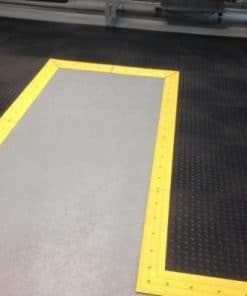
The choice of an ESD mat should take into account the type of work being performed, the workstation configuration, and the overall grounding arrangement. A suitable mat should be compatible with the grounding system and maintained correctly to ensure consistent performance. Regular cleaning is also important because dust, oils, and other contaminants can affect the surface and its electrical characteristics. Employees should understand how the mat works and how it fits into the wider ESD protection system rather than treating it as an isolated accessory.
For companies that work with sensitive electronics, selecting suitable Productos antiestáticos can support both equipment protection and workplace efficiency. These products may form part of a broader static-control programme designed around the specific needs of a facility. When the correct products are used together, businesses can reduce the likelihood of unexpected discharge events and create more consistent conditions for employees working with sensitive materials. The objective is to establish a controlled environment where ESD risks are considered during everyday operations rather than only after damage occurs.
Another important consideration is the quality and suitability of the materials used in an ESD environment. Different applications may require different resistance characteristics, dimensions, surface properties, and grounding arrangements. A laboratory handling tiny components may have different requirements from an industrial assembly workstation. Understanding these differences helps businesses select equipment that matches their actual working conditions. It can also prevent the unnecessary purchase of products that do not provide the appropriate level of protection for a particular application.
At Antistatic ESD, attention to static-control requirements can help organisations understand the role of appropriate ESD equipment in professional environments. A reliable approach considers the complete workstation rather than focusing on one product in isolation. Employees, equipment, surfaces, and grounding systems all interact with one another, so each element should contribute to the overall control strategy. This approach is particularly valuable for businesses where even a minor component failure could result in wasted materials, additional testing, repair work, or production delays.
Training also plays a significant role in maintaining an effective ESD-controlled workspace. Employees should know why grounding procedures are important, how to use workstation equipment correctly, and why certain materials should not be introduced into controlled areas without consideration. Good training can make ESD protection part of everyday workplace behaviour. When employees understand the reasons behind static-control procedures, they are more likely to follow them consistently and identify potential problems before they affect sensitive equipment.
Maintenance should also be included in an organisation's ESD management strategy. Work surfaces and protective equipment should be inspected regularly for visible wear, contamination, damage, or other issues that could affect their intended function. Grounding connections should also be checked according to the requirements of the workplace. A mat that is physically damaged or poorly maintained may not perform as expected, even if it originally met the required specifications. Consistent maintenance therefore supports the long-term reliability of the entire workstation.
For businesses seeking dependable static-control solutions, Alfombrillas antiestáticas can form an important part of a properly planned workstation. Their role becomes particularly valuable when they are correctly installed, grounded, maintained, and used alongside other ESD-control measures. A suitable mat can help provide a defined working area for handling sensitive products while supporting the broader goal of controlling electrostatic charge. Rather than relying on a single protective measure, businesses can build a more comprehensive approach by combining appropriate equipment with sound procedures and employee awareness.
The increasing use of electronic technology across manufacturing, engineering, research, and repair industries makes static control an ongoing consideration. As components become increasingly sophisticated and sensitive, the consequences of uncontrolled electrostatic discharge can become more significant. Investing attention in workstation design and ESD procedures can therefore contribute to more reliable operations and better protection of valuable components. A carefully planned environment also demonstrates a commitment to quality, consistency, and responsible equipment handling.
Antistatic ESD provides solutions for environments where controlling electrostatic discharge is an important operational requirement. Businesses can assess their individual working conditions and choose suitable products according to their equipment, processes, and workstation requirements. With the right combination of protective equipment, grounding practices, maintenance, and employee training, organisations can create workspaces that are better prepared to manage the challenges associated with static electricity. This balanced approach can support safer handling practices while helping sensitive electronic products remain protected throughout their working processes.
Ultimately, effective ESD protection depends on consistency. Products should be selected according to the environment, installed correctly, maintained regularly, and supported by appropriate working procedures. Alfombrillas antiestáticas can be an important component of that strategy, particularly for workstations where electronic components are frequently handled. When combined with suitable Productos antiestáticos, proper grounding, employee awareness, and routine maintenance, they can help businesses establish a controlled environment that reduces unnecessary exposure to electrostatic discharge and supports dependable day-to-day operations.


Comments
Post a Comment